EN ▾
Azimuth — the compass direction of an object
Azimuth is the compass bearing of an object, measured in degrees clockwise from north. With altitude it fixes a position in the sky.
Azimuth is the compass direction of an object, measured in degrees from north and running clockwise through east. North is 0°, east 90°, south 180°, west 270°.
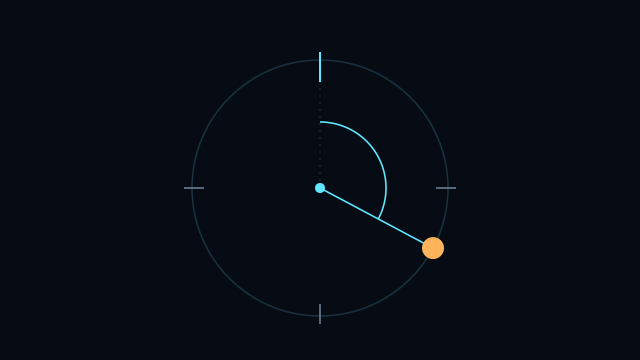
Why it is measured from north
Convention, and an inconsistent one. Astronomers historically measured azimuth from south, and some older references still do, which is a 180° difference and a reliable source of confusion. Navigation and modern practice measure from north, and that is what this app uses.
What to do with it
It is the number that tells you where to look, and from that, where to stand. Knowing the eclipse will be at altitude 12° and azimuth 253° — west-southwest — is enough to work out from a map whether the hill on that side is in the way, a calculation worth doing the day before rather than on the morning.
These are bearings from true north, not magnetic north. A hand compass or a phone points at the magnetic pole, which is a few degrees off in Britain and 15–20° off in parts of North America and the far north. At 12° of altitude that difference is easily the difference between a clear horizon and a hillside. Correct for the local declination, or use the Sun itself.
Azimuth runs 0° to 360°, wrapping through 0 at north, and it becomes meaningless at the zenith, where every direction is downhill. Together the two angles are all you need to point anything at the Sun, and they are what the all-sky chart is drawn in.
Related
Updated 13 August 2026.